Roles
Compare
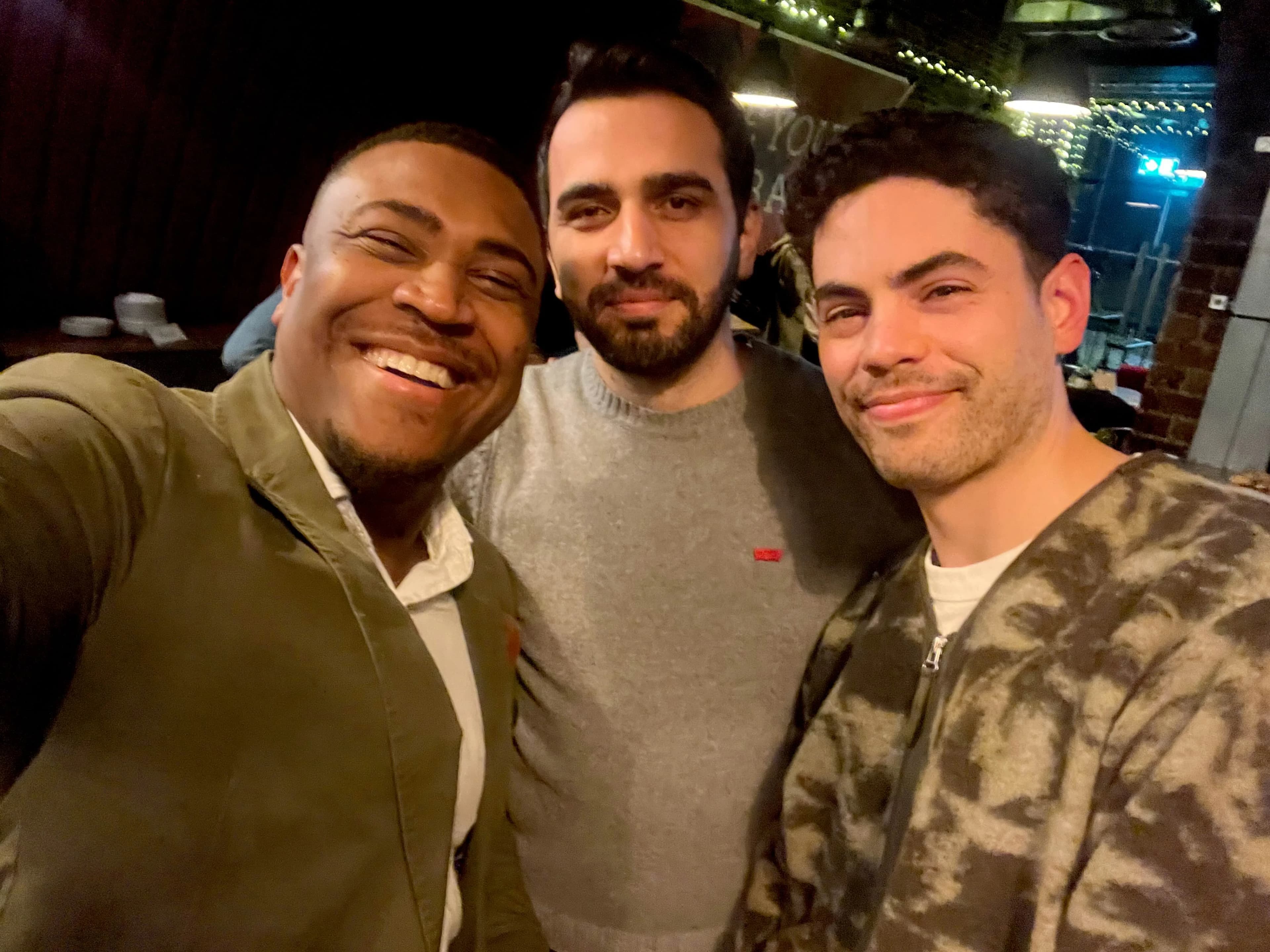
The vision for Flynt as the heart of how you connect professionally, and the lessons I've learned building it with Ivan and Nurlan.
TL;DR: A long read on what Flynt is becoming, the heart of how you connect professionally, plus a few lessons I've picked up building it alongside Ivan and Nurlan.
A note before we dive in: this is a deliberately long read. It's not something to skim on the go. It's me pouring a lot of what I've been thinking about into a format that can genuinely bring you along on the journey of where I see Flynt becoming most powerful in people's lives. If that's the kind of thing you've got time for, grab a coffee. If not, bookmark it and come back to it later.
You could make a fair argument that this should really be multiple long-form pieces rather than one singular behemoth. That's deliberate. If you make it through to the finish line, this one's written for you.
I wanted to take a moment to share some of what I've been thinking about lately. Not a product update. More the kind of thing Ivan, our COO, Nurlan, our CTO, and I talk about between ourselves when we're working out what Flynt should become next. A look at where we are, where we see this heading, and a few things I've picked up along the way.
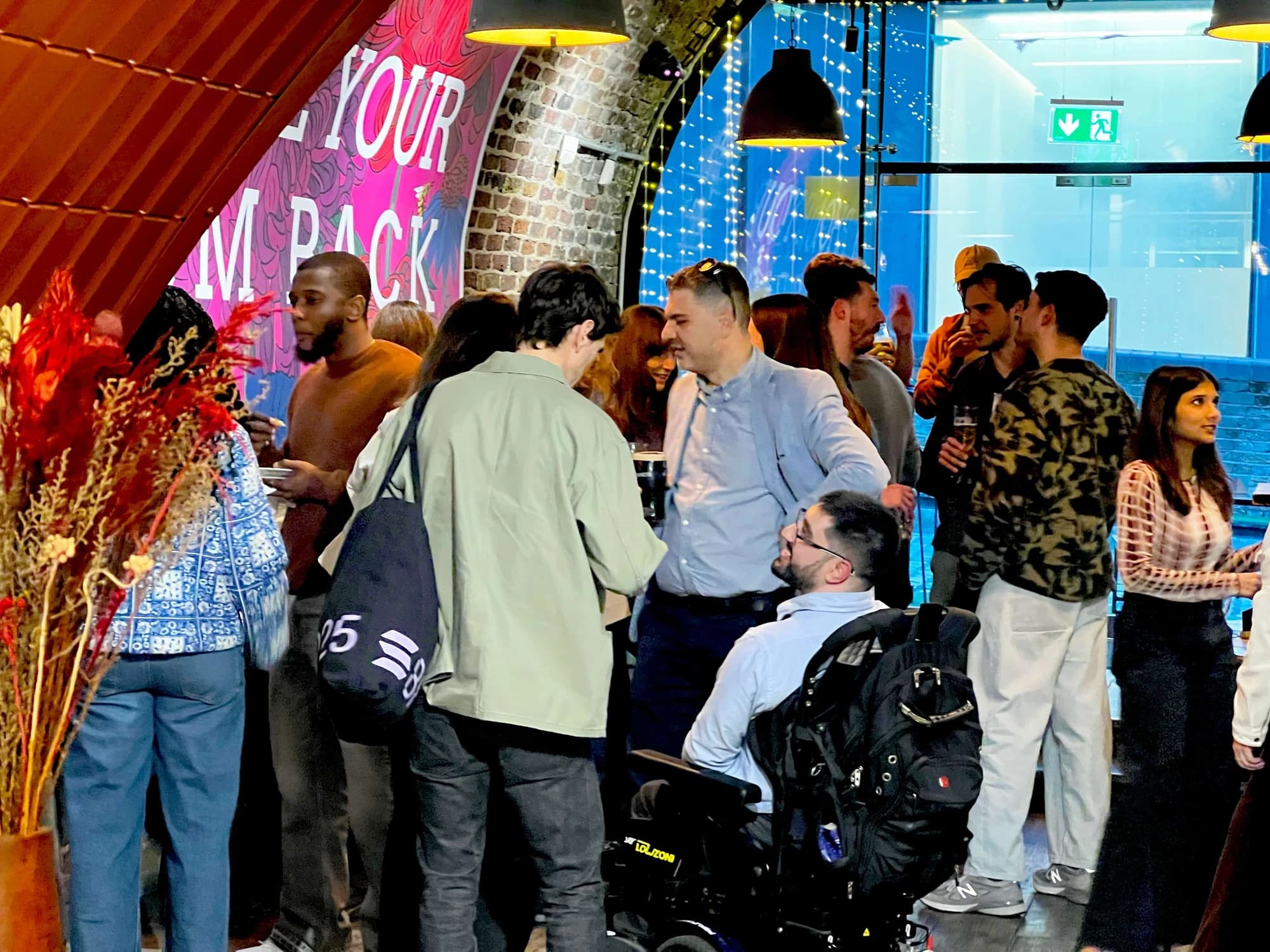
We want Flynt to be the heart of how you connect professionally. Not the place you open every day. The place you come to when you want to meet someone, and know it's going to be worth your time.
To bring everyone on the same page on everything that's possible on Flynt today, you can:
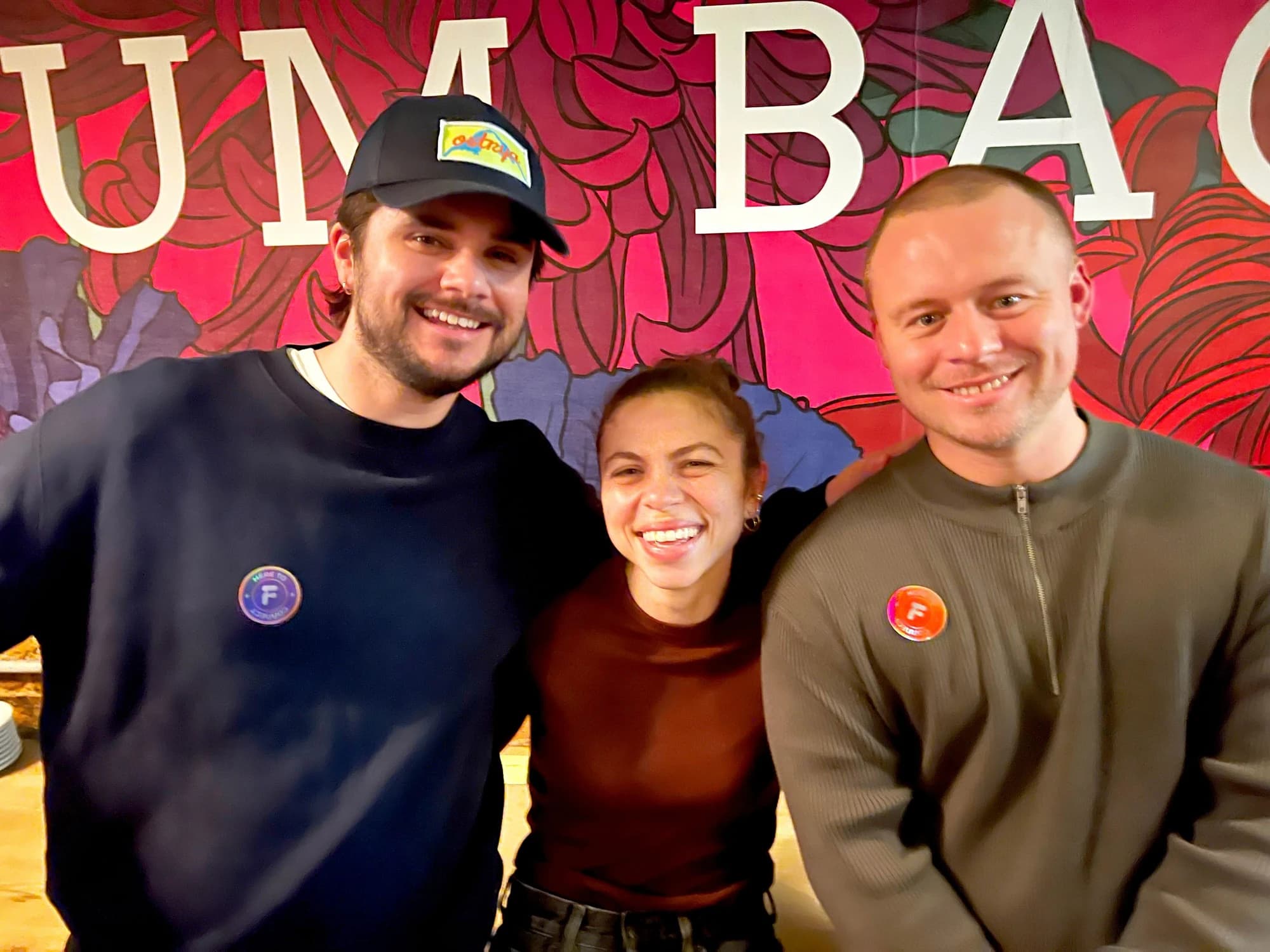
We believe a huge part of what makes a career fulfilling is the people you meet along the way. The ones who've walked the path you're considering. The ones who are walking it with you right now. The ones whose world is just adjacent enough to yours that a conversation with them shifts how you see your own.
That's what we're building Flynt for. Not a network you maintain. A network that works for you.
Flynt is deliberately built around collaboration over competition. There are other networks, which shall remain unnamed, that are effectively leaderboards. Who's the most senior, who just got promoted, who's at the most impressive company, who can signal upward mobility the loudest. That's a different product, for a different need.
Flynt is about connecting on a purely human level. Sometimes that means learning something from each other. But how you learn from someone isn't always a function of how senior they are, or how big the logo on their CV is. Some of the most useful conversations you'll have will be with people who just happen to see the world in a way you hadn't considered, regardless of their title or their employer.
One thing I've been learning is that meeting the right person doesn't always mean someone with a similar profession. It doesn't always mean a similar industry. Sometimes it means someone who sees the world through a similar lens to how you see it. Maybe they're naturally entrepreneurial. Maybe they're a systems thinker. Maybe they're a deep specialist in a niche you've only just started to explore. Maybe they're a generalist, and that's the thing that makes them exceptional.
That's one of the adventures, and one of the challenges, of building Flynt. We really want to get to know you. What makes you tick isn't always described through your job title. We need the nuance of what makes you who you are so we can introduce you to other people you'll really get along with.
We see a world in which you will tell us what you're working toward. A career move. A company you're considering starting. A side project. A skill you want to sharpen. A question you haven't quite figured out how to ask yet.
From there, Flynt will weave that into everything: the people you're shown, the groups you're invited to join, the meetups we nudge you toward, the follow-ups we suggest. As your goals shift, so will the network around you. An active thinking partner for the parts of your career you're still working out. A network that stays useful across the whole shape of your working life.
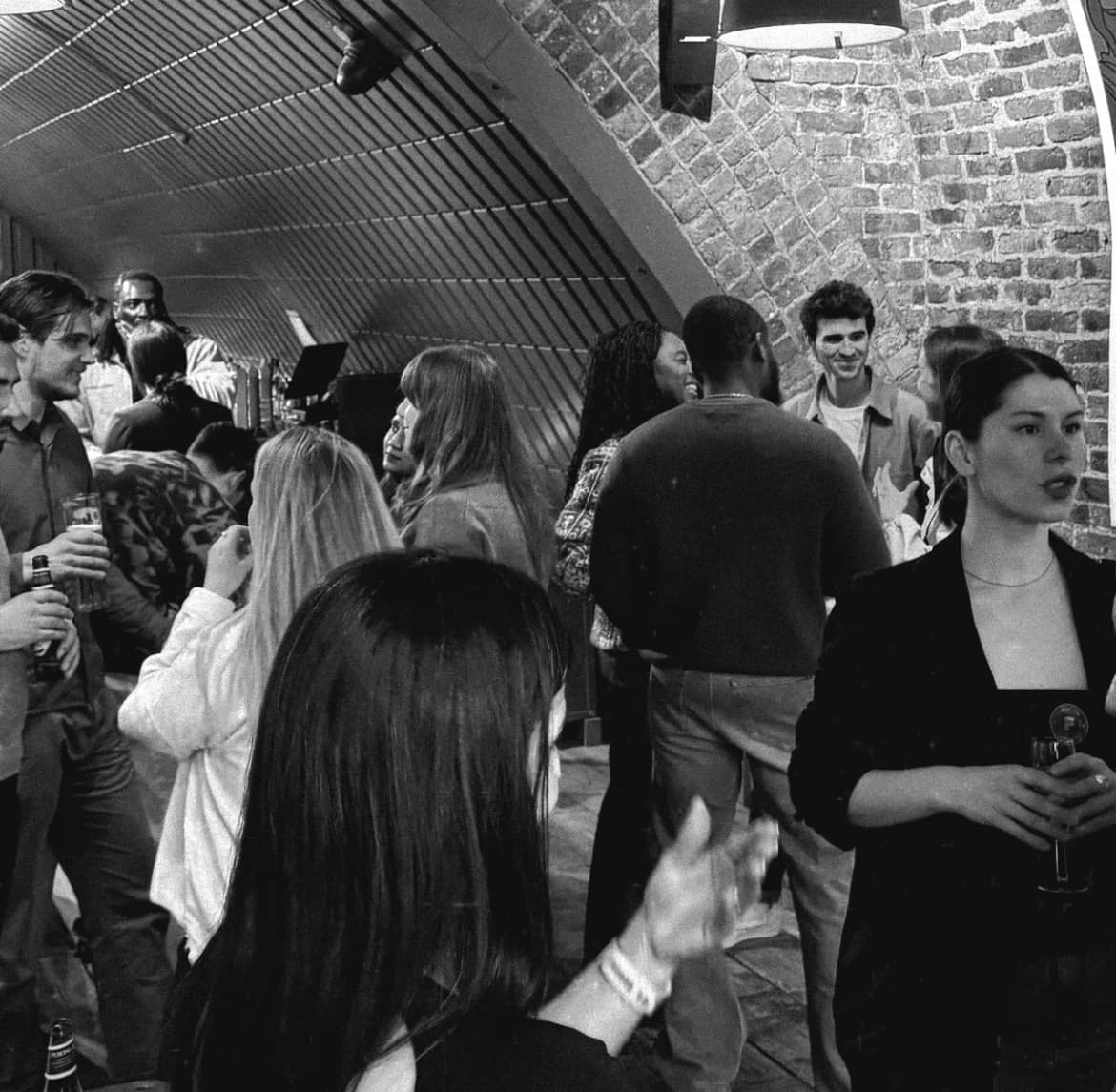
Goals are going to be increasingly central to how Flynt works. Not just what you're working toward, but why it matters to you. And crucially, what achieving it actually looks like in reality.
If you want to become a founder, we want to introduce you to people who've actually been through that journey. People who can give you a really honest account of what making that life decision looks like. Not just the highlight reel.
When we read stories of what it means to live a particular kind of life, the most fulfilling and rewarding parts tend to be the ones that make it through to the page. The painful parts, the profoundly disrupting parts, the moments that would actually change your mind, are much harder to find in a published story. It's usually in a one-to-one conversation with someone who's lived it that the real depth of honesty comes through.
We don't just want to help you reach your goals. We want to help you better understand them. We want to help you shape them collaboratively, in a way that feels genuinely well understood by you.
You're no longer just waiting for your monthly match. You can look at who's in the network, tell us who you'd like to meet, and if it's mutual, we make it happen. Deliberate, mutual, high signal. More to come.
A few lessons I've picked up along the way that I wanted to share, in case they're useful to anyone else building something.
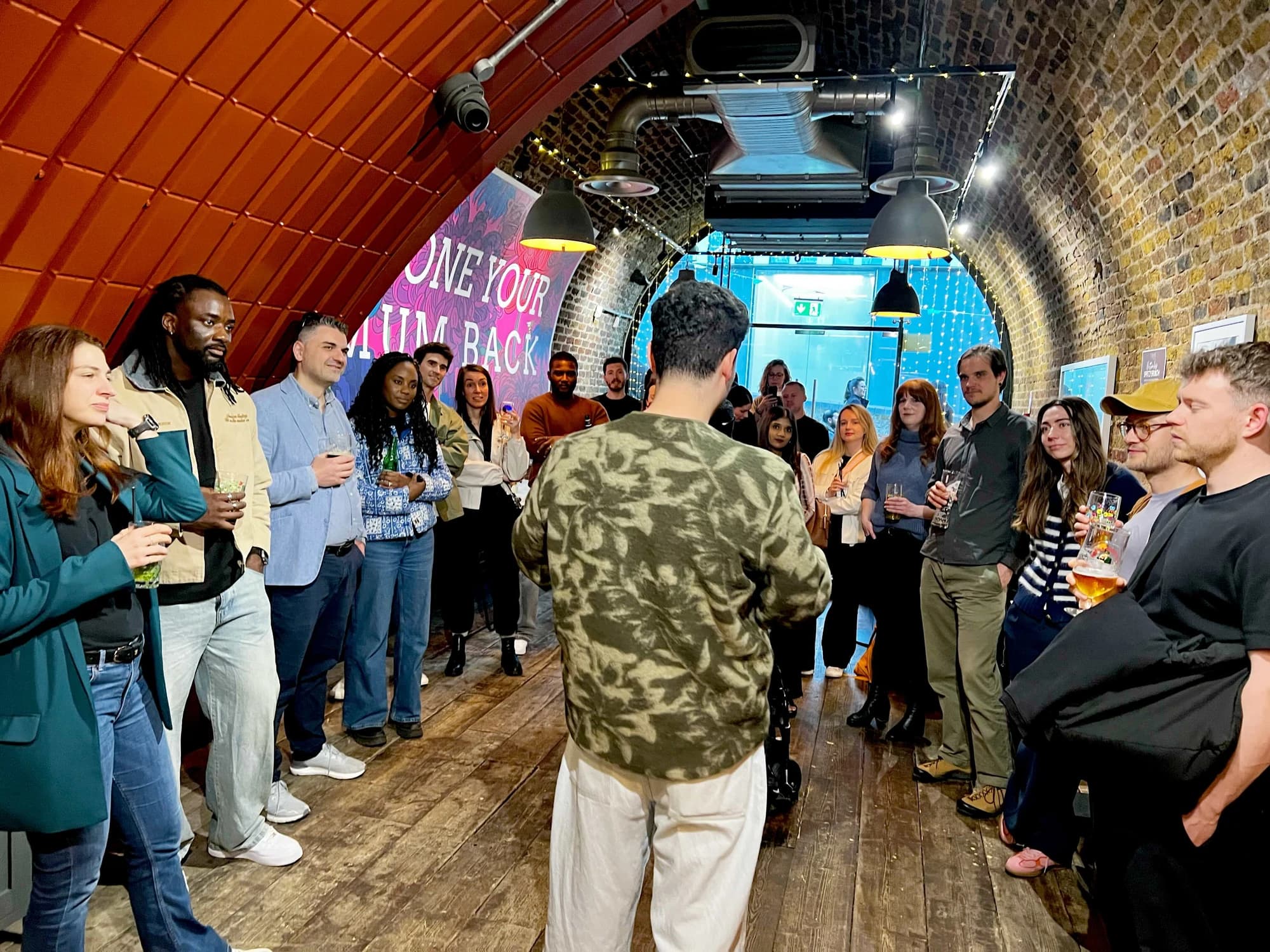
Early believers give you an enormous amount of grace. They're bought into where you're heading, not just where you are today. When the calendar invite didn't quite land, when onboarding felt restrictive, when a question was worded wrong, they told us and kept turning up. That feedback isn't a complaint. It's a gift.
What people love turns out to be what makes Flynt different. Here's what we keep hearing.
The 1:1 format makes the conversation substantive. A data scientist considering a move into product management told us group networking never gave her space for the kind of conversation she was actually looking for. Two people, 45 minutes, no crowd to compete with. It sounds obvious. It isn't common.
The lack of immediacy is the feature. A founder building software for creators told us he values the wait. That Flynt doesn't hand you a match the moment you sign up is part of why he trusts it. In a world designed to hook you every day, a product that deliberately doesn't is a relief.
It's the happy medium for people who don't love traditional networking. A growth marketer at a well-known consumer brand told us she's not confident at networking events and never has been. Flynt sits between the awkwardness of walking into a room of strangers and the anonymity of LinkedIn DMs. Structured enough to feel safe, open enough to feel real.
It brings back the studio feeling. A remote-working design lead told us Flynt reminds him of the design studio he misses from university. The camaraderie of it. He'd noticed how much of that had disappeared since the pandemic and hadn't quite named what he was missing until he found it here.
Sometimes you make an actual friend. A product manager working abroad wrote in after his first match to say it felt like he'd made a real friend. Not a connection, not a LinkedIn add. A friend. That sentence alone has shaped a lot of how we think about what Flynt is.
Sometimes the best conversations aren't really about work. Two people who happen to have something in common, who were going to talk about careers but ended up talking about something else entirely. We hear this often enough that it's no longer a surprise. People find meeting other thoughtful people intrinsically fulfilling.
Those things are the product. Everything else is in service of them.
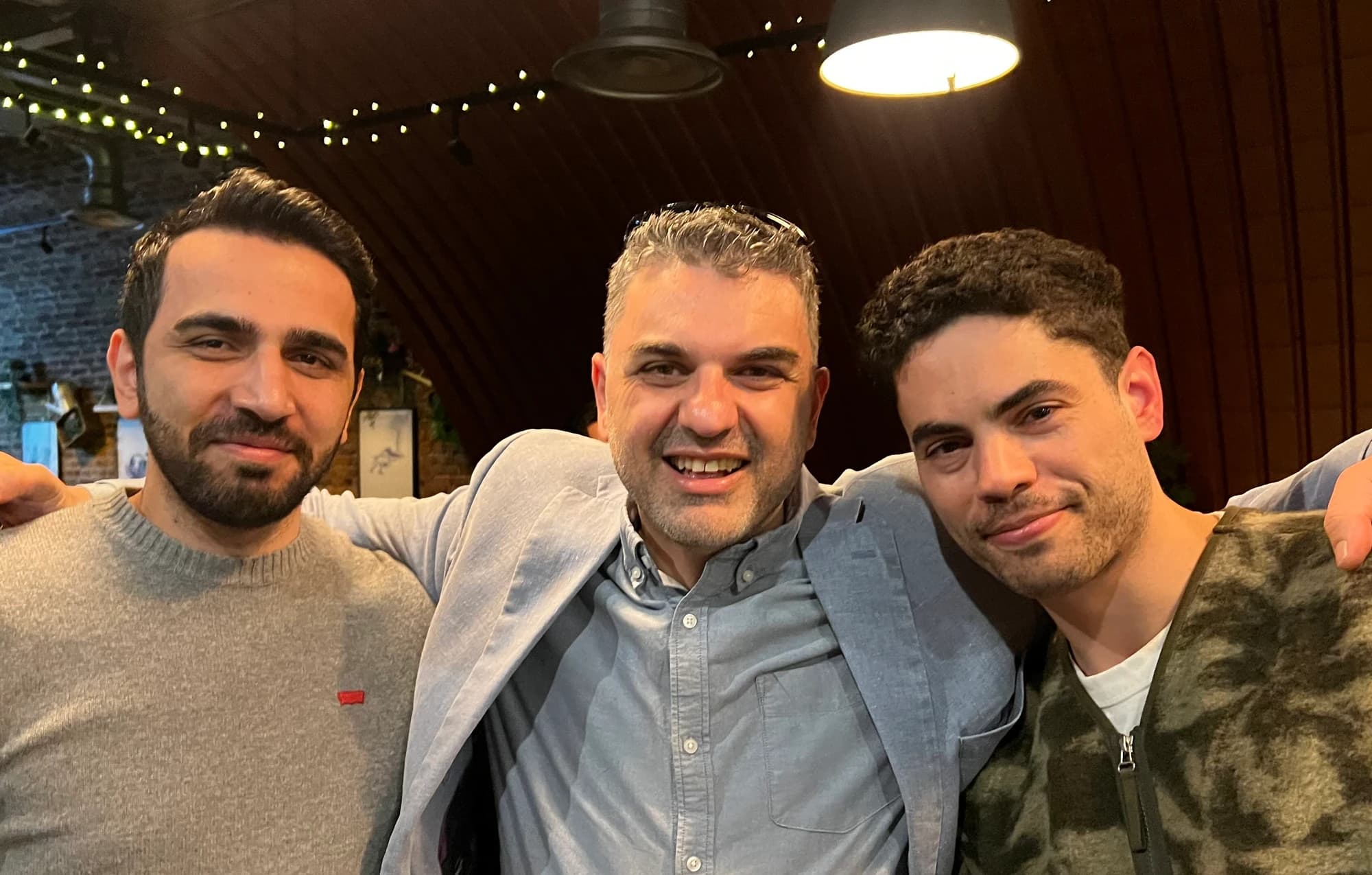
Ivan and Nurlan come at problems from different angles than I do. The feedback loop between the three of us is the fastest I've ever worked in. See an idea, build it, get it in front of a user, iterate.
The magic isn't in the agreement. It's in the healthy tension between three different ways of looking at the same problem.
For example, Nurlan thinks deeply about what would make meeting a new engineer fulfilling for another engineer, and how that feels genuinely different to what might make someone who thinks like a designer feel rewarded by meeting someone new. Ivan thinks about the network as a whole. How you optimise for everyone having a great match, not just the local maxima of any single one. I tend to come at it from the depth of the experience. How do we make it profoundly resonate with the human being in a way that's genuinely memorable?
None of us are tied to these lenses. What actually happens is more relativistic than that. One person's way of thinking prompts a response in another, which reveals a gap in a third, and between us we end up covering each other's blind spots. Every gap plugged. Something rich and fulfilling on the other side.
What's also been fascinating is seeing what happens when people go beyond their preset roles. My background is as a designer, but operating from a CEO lens has been a completely different kind of stretch. And while Nurlan's background is traditionally engineering, there have been many moments where I've been genuinely impressed by his attention to design detail.
The lines blur in a small team, in a good way. People rise to the shape of what the thing needs, not what their CV says they should be doing.
Alongside Flynt there's Google for calendars, infrastructure keeping pages fast, services generating match context, error monitoring, observability. There's who we trust to send emails that alert you to something important. Eventually, as we head toward launching a mobile app, there will be the Google Play Store and the Apple App Store as the mediums through which the Flynt experience reaches you on your phone. Your product's reliability sits alongside other people's. You're not just building a product, you're assembling a stack you now have to run.
It's been fascinating to understand how interconnected the global ecosystem of value really is. Behind every product you use, there's a quiet web of other companies whose work has to go right for yours to feel effortless.
Flynt is still early. The version of it I've described here, the one that knows what you're working toward, the one that weaves the right people and groups and meetups into your career as it evolves, that version is still ahead of us. But we're closer to it with every match, every piece of feedback, every person who tells a friend.
If you're already on Flynt, keep telling us what's working and what isn't. Invite someone you admire. Come to a meetup. Try people you might like and tell us who stood out. You're not just using Flynt. You're shaping what it becomes.
And if you're not on Flynt yet, we'd love to have you. Come help us build the network we all wish existed.
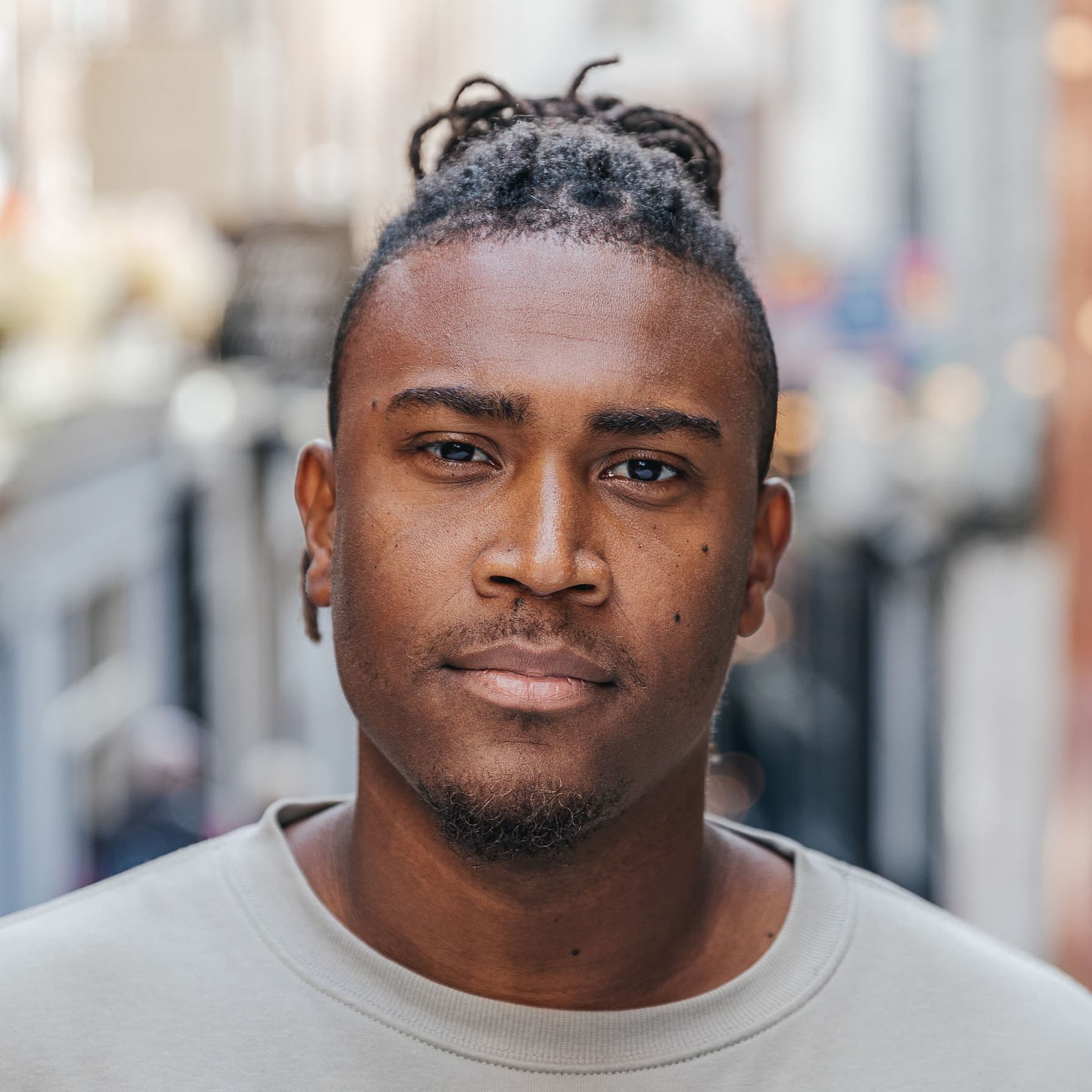
Heldiney Pereira – Co-founder & CEO
I'm building Flynt because I believe in a human-centred approach to making professional connections. Our technology is designed to make people feel more connected, less isolated on their career journey and inspired by all the great people they meet.
We'll show you people who might be helpful for your career goals and match you with one of them monthly. Drop your email to join.